


Schöck thermal break elements: allies for balcony safety
 InfoWeb Marketplace · Editorial team
Published on 29 May 2018 · 4 min read
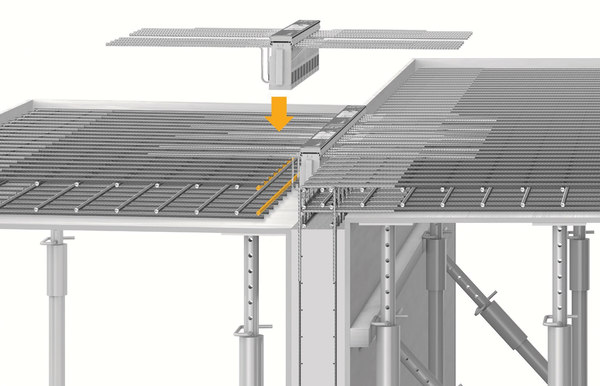
Special façade elements (balconies and loggias) often prove to be a sensitive subject for construction professionals. The collapse of a balcony in Angers in 2016, which claimed 4 victims, or more recently, last March, the fall of three balconies from a building under renovation in Nanterre, have left their mark. The subject remains topical: the French Ministry of Territorial Cohesion has commissioned a study on balcony safety, under the aegis of the Agence Qualité Construction (AQC), also involving the Association de certification des armatures béton (Afcab). Improving the strength of buildings is more than ever on the agenda, particularly on the eve of the Grand Paris construction projects. This is a conviction shared by Schöck, the inventor of thermal break elements.
Balcony pathology according to the AQC
Defects affecting balconies fall into two categories: structural ones, related to faulty on-site implementation, with consequences ranging from simple crumbling at the slab edge to failure of the balcony; and those related to climatic and moisture problems, with repercussions such as the formation of efflorescence and stalactites on the underside, or leaks. It should also be remembered that, to date, regulations do not require the builder to waterproof balconies. As a result, many claims stem from defective design or construction of the slopes meant to channel water toward the collection and drainage systems: insufficiently inclined, sometimes even directed toward window sills, the drainage is rendered ineffective and the water stagnates, causing leaks inside the dwelling.
Collapse risks
Reinforcement defects are the most frequent cause of collapses, and very often the error does not come from the design of the reinforced concrete drawings but rather from a misreading of them (for example, confusing the upper layer of reinforcement with the lower layer). Cracks in the upper part of the slab and parallel to the support may be explained by an insufficient steel section: indeed, for a cantilevered balcony, the quantity of steel (number and diameter of bars) needed for the structural load transfer of the element must be rigorously defined. Likewise, poor vertical positioning of the steel is detrimental: if placed too high, it causes insufficient concrete cover, promoting corrosion and the appearance of cracks; if placed too low, it reduces the moment resistance (lever arm) of the cantilevered element.
Best practices
The AQC highlights a few best practices to prevent any risk of defects:
• increase supervision of workers by site management and set up a self-inspection system on site;
• systematically check the correct positioning and ratio of the reinforcement;
• take particular care in forming the slopes of balconies in service, facilitating water drainage to prevent it from seeping through the concrete;
• waterproof the balcony surface;
• take care to avoid thermal bridge effects.
Schöck, a major player in the field of thermal bridge treatment, explains precisely why installing a thermal break element fully meets balcony safety expectations.
Schöck thermal break elements, guarantors of balcony safety
Recognized for their structural, thermal and acoustic performance (CERQUAL-certified for the treatment of impact noise on external walkways with external thermal insulation), Schöck thermal break elements also aim to guarantee a maximum level of safety for the balconies where they are installed.
The thermal break element is specified by the Schöck Engineering Department on the basis of the structural forces to be absorbed (tension, compression and shear) and the drawings provided by the project's structural engineering firm. Each thermal break element is custom-made and then delivered to the site for a specifically designed configuration.
Thus, the design of a thermal break element 1 metre long, for example, takes into account a reinforcement ratio per metre (number and diameter of steel bars per metre) while respecting the height of the steel in the upper part. Schöck also takes care to indicate very clearly on its thermal break elements, via a nameplate, their reference and installation direction in order to guide workers on site.
Steffen Scheer, Technical Director at Schöck, says: ? The thermal break element provides double security regarding the height of the reinforcement. The use of a dense insulation material of the NEOPOR® type and the presence, in the upper part of the element, of a plastic cover fitted with hooks ensure that the steel bars are correctly positioned at the specified height, even if workers walk on the reinforcement of the elements.?
It should be noted that the thermal break element is insensitive to potential water infiltration since, on the one hand, the insulating body of Schöck thermal break elements is made of expanded graphite polystyrene (which does not absorb water) and, on the other hand, the steel bars passing through the insulating body are stainless to counter steel corrosion in the event of moisture. This is an advantage that, of course, does not exempt builders from waterproofing balconies.
Finally, other added values of Schöck's expertise are its customer support and product traceability. From the design phase through to installation, Schöck teams are present throughout the entire project. Feasibility studies, budget estimates, technical support, layout plans for each structure, assistance with site start-up, and training of the partner in installing thermal break elements according to best practice, up to the issuance of an AFP (Attestation de Formation à la Pose des rupteurs)...