


Editorial team · Structural work
 InfoWeb Marketplace · Editorial team
Published on 28 September 2020 · 4 min read
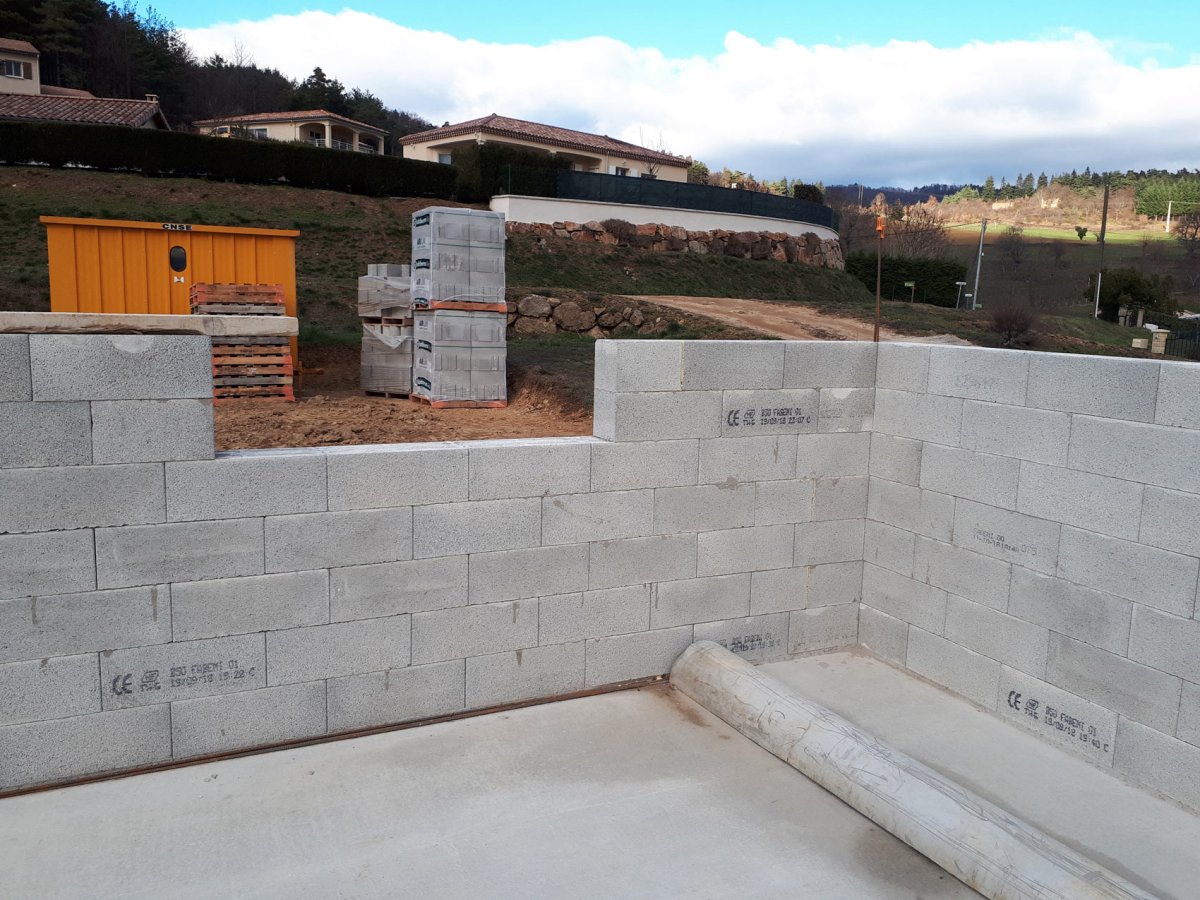
Fabemi low-carbon insulating blocks, a response to the E+C- label and the RE 2020
InfoWeb Marketplace · Editorial teamPublished on 28 September 2020 · 4 min read
Launched in November 2016, the E+C- label (Positive-Energy Buildings and Carbon Reduction) aims to produce positive-energy buildings with a low carbon footprint. The goal is to anticipate, together with all construction stakeholders (project owners, project managers, contractors), the Environmental Regulation (RE) 2020 for new construction. The major change compared with the Thermal Regulation (RT) 2012 is that it takes into account the building's carbon emissions throughout its entire life cycle.
For the concrete industry, as for other materials, the challenge is therefore to integrate a new regulatory requirement linked to the carbon footprint of buildings, while ensuring compliance with the other regulations a project must meet. The FABTHERM® insulating blocks from the Fabemi Group, a major player in the concrete products market, are 100% natural and recyclable. They help reduce the carbon footprint of buildings (by 4 to 8% compared with other construction solutions), thus making it possible to build E+C- projects, and anticipate the requirements of the upcoming RE 2020.
As the aim is also to combine low-carbon concrete with the circular economy, the 450 construction projects carried out since the launch of the FABTHERM® insulating blocks (residential, public-access buildings and industrial buildings), representing approximately 250 000 m2 of blocks, were all carried out in the Greater South-East of France, close to the Fabemi Group's production plants.
Fabemi's three main research areas – reducing the environmental impact of its blocks, responding to increasingly demanding thermal regulations and ensuring better wall insulation – led to the development of FABTHERM® concrete blocks.
Traditionally manufactured without firing and produced locally, which reduces their environmental impact, the FABTHERM® AIR 0.6, 1.1 and 1.8 and FABTHERM® ÉCO blocks are 100% natural and recyclable. They offer high thermal performance while having the lowest environmental impact in their category. By launching these products, Fabemi demonstrates its capacity for innovation and its commitment to eco-design and industrial ecology.
From manufacturing to end of life, the carbon footprint of Fabemi blocks is reduced thanks to local production (very low transport impact) and a manufacturing process without firing. The blocks are produced with aggregates from quarries located near the Fabemi plants, dried naturally, and used on construction sites close to the production units. In addition, Fabemi FABTHERM® insulating blocks, 100% recyclable, do not need to be sorted after deconstruction, as the rubble waste requires no special handling. After the demolition of buildings, they thus become ?inert? waste. Finally, FABTHERM® insulating blocks come with Environmental and Health Declaration Sheets (FDES). These verified data, available on INIES, make it possible to calculate the contribution of the products to the environmental impact of the building to be constructed.
Two to eight times more insulating than traditional blocks, the 20 cm wide FABTHERM® AIR blocks 0.6, 1.1 and 1.8, made with lightweight or standard aggregates, incorporate a 100% mineral AIRiumTM foam core that enhances their insulating capacity. They thus offer exceptional thermal resistance for this block width, meeting all needs (multi-family housing, single-family homes and commercial buildings) and the specifications for high-performance insulating walls. This insulating mineral foam makes it possible to build and insulate at the same time without affecting the carbon weight of the facade, saving time on site and gaining living space.
Fabemi FABTHERM® AIR blocks offer numerous qualities (acoustic performance, fire and seismic tests), verified FDES sheets (INIES database) and a Technical Assessment (FABTHERM® AIR 1.1 and 1.8) to meet all the technical requirements of construction projects. Under Technical Assessment (No. 16/19-773_V1), the Fabemi FABTHERM® AIR 1.1 glued insulating block has a thermal resistance of R = 1,12 m2.K/W. Five times more insulating than a traditional block, the FABTHERM® AIR 1.1 combines mechanical and fire resistance with acoustic and environmental performance. It is ideal for multi-family housing up to R+4.
Under Technical Assessment (No. 16/19-772_V1), the Fabemi FABTHERM® AIR 1.8 glued insulating block has a thermal resistance of R = 1,77 m2.K/W. Eight times more insulating than a traditional block, the FABTHERM® AIR 1.8 reduces the thickness of interior linings and controls the environmental impact of the facade. It is ideal for small multi-family buildings up to R+3. A patented Fabemi innovation, the FABTHERM® AIR 0.6 mortar-laid insulating block has a thermal resistance of R = 0,58 m2.K/W. Twice as insulating as a traditional block, the FABTHERM® AIR 0.6 is the only 100% mineral insulating block to be laid with mortar. It is ideal for small multi-family buildings up to R+2.
The Fabemi FABTHERM® ÉCO hollow glued insulating block has a thermal resistance of R = 0,51 m2.K/W. Twice as insulating as a traditional block thanks to its geometry, the FABTHERM® ÉCO meets the architectural, thermal and economic needs of the construction market. Ideal for grouped single-family homes or small multi-family buildings up to R+2, its thermal performance makes it possible to keep a traditional concrete construction method.
For the concrete industry, as for other materials, the challenge is therefore to integrate a new regulatory requirement linked to the carbon footprint of buildings, while ensuring compliance with the other regulations a project must meet. The FABTHERM® insulating blocks from the Fabemi Group, a major player in the concrete products market, are 100% natural and recyclable. They help reduce the carbon footprint of buildings (by 4 to 8% compared with other construction solutions), thus making it possible to build E+C- projects, and anticipate the requirements of the upcoming RE 2020.
As the aim is also to combine low-carbon concrete with the circular economy, the 450 construction projects carried out since the launch of the FABTHERM® insulating blocks (residential, public-access buildings and industrial buildings), representing approximately 250 000 m2 of blocks, were all carried out in the Greater South-East of France, close to the Fabemi Group's production plants.
Building E+C- with low-carbon concrete
Fabemi's three main research areas – reducing the environmental impact of its blocks, responding to increasingly demanding thermal regulations and ensuring better wall insulation – led to the development of FABTHERM® concrete blocks.
Traditionally manufactured without firing and produced locally, which reduces their environmental impact, the FABTHERM® AIR 0.6, 1.1 and 1.8 and FABTHERM® ÉCO blocks are 100% natural and recyclable. They offer high thermal performance while having the lowest environmental impact in their category. By launching these products, Fabemi demonstrates its capacity for innovation and its commitment to eco-design and industrial ecology.
From manufacturing to end of life, the carbon footprint of Fabemi blocks is reduced thanks to local production (very low transport impact) and a manufacturing process without firing. The blocks are produced with aggregates from quarries located near the Fabemi plants, dried naturally, and used on construction sites close to the production units. In addition, Fabemi FABTHERM® insulating blocks, 100% recyclable, do not need to be sorted after deconstruction, as the rubble waste requires no special handling. After the demolition of buildings, they thus become ?inert? waste. Finally, FABTHERM® insulating blocks come with Environmental and Health Declaration Sheets (FDES). These verified data, available on INIES, make it possible to calculate the contribution of the products to the environmental impact of the building to be constructed.
Fabemi FABTHERM® AIR low-carbon insulating blocks
Two to eight times more insulating than traditional blocks, the 20 cm wide FABTHERM® AIR blocks 0.6, 1.1 and 1.8, made with lightweight or standard aggregates, incorporate a 100% mineral AIRiumTM foam core that enhances their insulating capacity. They thus offer exceptional thermal resistance for this block width, meeting all needs (multi-family housing, single-family homes and commercial buildings) and the specifications for high-performance insulating walls. This insulating mineral foam makes it possible to build and insulate at the same time without affecting the carbon weight of the facade, saving time on site and gaining living space.
Fabemi FABTHERM® AIR blocks offer numerous qualities (acoustic performance, fire and seismic tests), verified FDES sheets (INIES database) and a Technical Assessment (FABTHERM® AIR 1.1 and 1.8) to meet all the technical requirements of construction projects. Under Technical Assessment (No. 16/19-773_V1), the Fabemi FABTHERM® AIR 1.1 glued insulating block has a thermal resistance of R = 1,12 m2.K/W. Five times more insulating than a traditional block, the FABTHERM® AIR 1.1 combines mechanical and fire resistance with acoustic and environmental performance. It is ideal for multi-family housing up to R+4.
Under Technical Assessment (No. 16/19-772_V1), the Fabemi FABTHERM® AIR 1.8 glued insulating block has a thermal resistance of R = 1,77 m2.K/W. Eight times more insulating than a traditional block, the FABTHERM® AIR 1.8 reduces the thickness of interior linings and controls the environmental impact of the facade. It is ideal for small multi-family buildings up to R+3. A patented Fabemi innovation, the FABTHERM® AIR 0.6 mortar-laid insulating block has a thermal resistance of R = 0,58 m2.K/W. Twice as insulating as a traditional block, the FABTHERM® AIR 0.6 is the only 100% mineral insulating block to be laid with mortar. It is ideal for small multi-family buildings up to R+2.
Fabemi FABTHERM® ÉCO low-carbon insulating block
The Fabemi FABTHERM® ÉCO hollow glued insulating block has a thermal resistance of R = 0,51 m2.K/W. Twice as insulating as a traditional block thanks to its geometry, the FABTHERM® ÉCO meets the architectural, thermal and economic needs of the construction market. Ideal for grouped single-family homes or small multi-family buildings up to R+2, its thermal performance makes it possible to keep a traditional concrete construction method.
Advertisement